 Room by room
Lighting, explained.
Light Magazine
All articlesRoom by room Chandeliers and shades
A chandelier for the living room: size, height and how many lumens you need
 Chandeliers and shades
Lampshades and light shades: how to measure them and what to check when replacing
 Outdoor lighting
Motion sensors and dusk-to-dawn sensors: wiring and setup (LUX, TIME, SENS)
Work it out before you buy
All four calculators- How many lumens do you need?The luminous flux you need, from room size and use.
- What size chandelier?The diameter in proportion to your room size and ceiling height.
- Which light colour?Kelvin values room by room, explained.
- Switching to LEDFrom old watts to the matching LED lumens — and how much you save.
Why BudaiLux?
-
We show it switched on, too
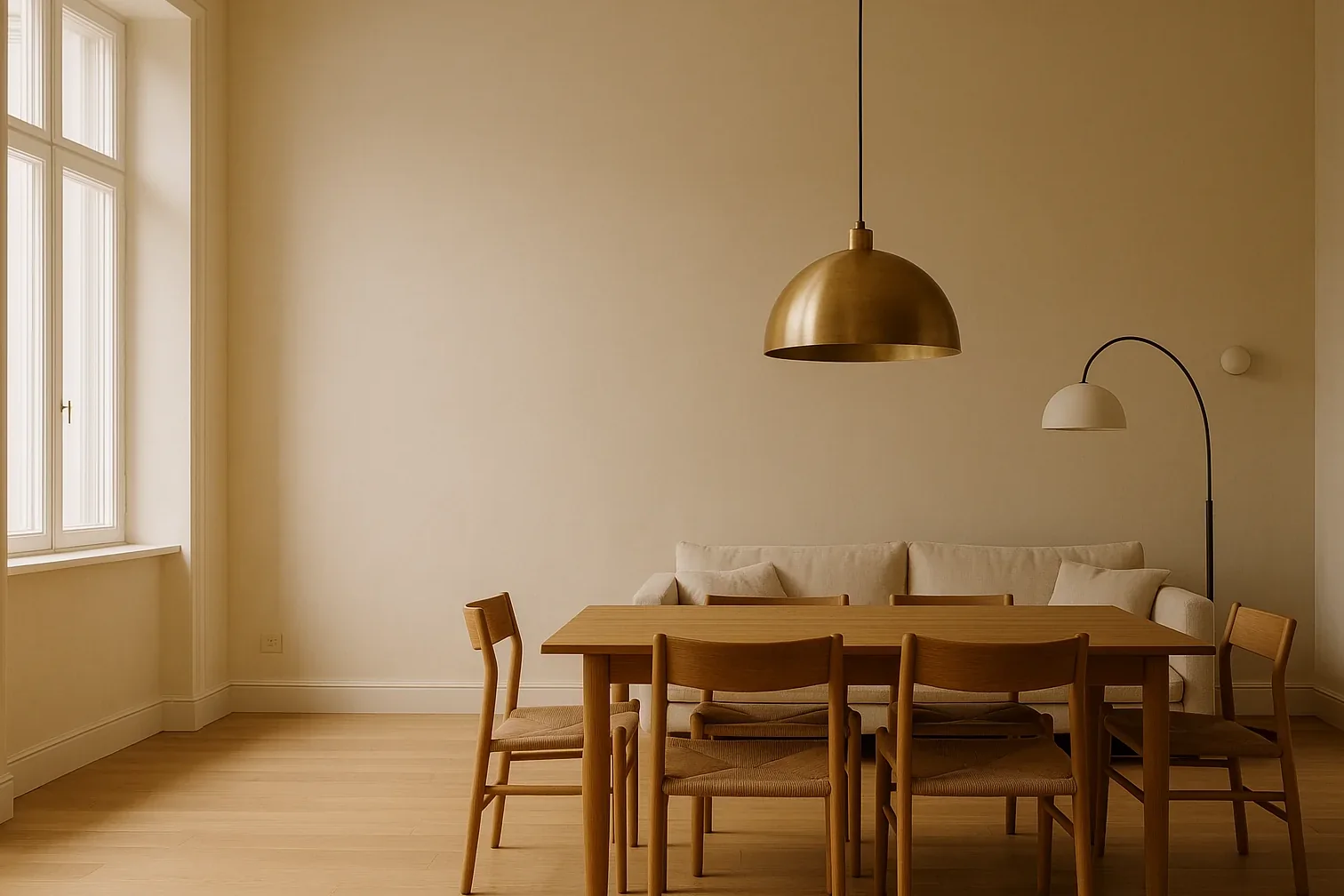
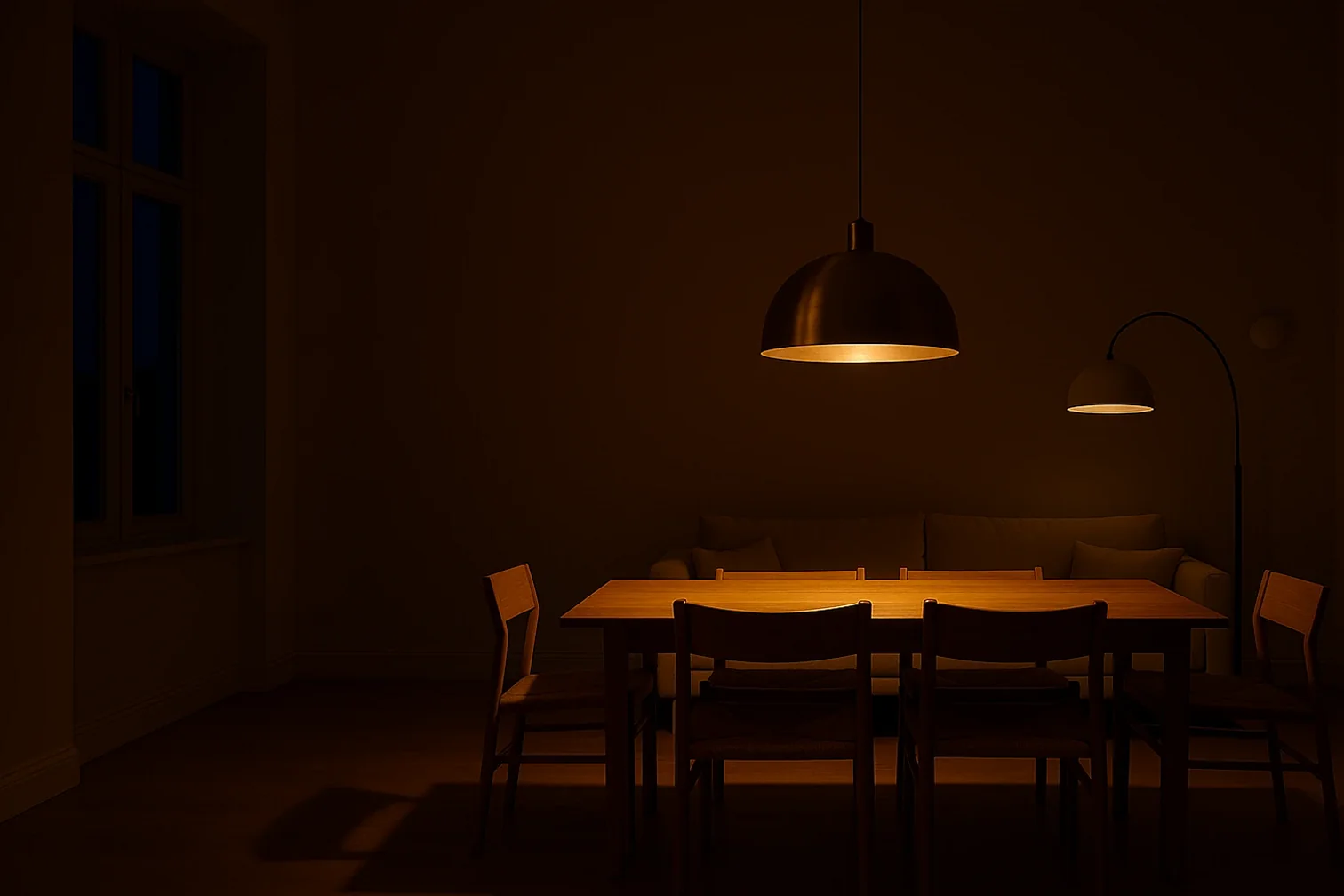
Every light also has a photo of it switched on. No need to imagine how it looks in the evening — switch off the lights and see.
-
Precise data, not adjectives
Lumens, colour temperature, CRI, IP rating and exact dimensions for every product — so you can compare, rather than letting the slogan on the box decide.
-
Manufacturer details, safety information
Every light comes with the manufacturer's details, the type number and the product safety information — so you know what you are buying.
Frequently asked questions
How many lumens does a living room need?
A living room is usually comfortable at 100–150 lux. In a 16 m² room that means roughly 1,600–2,400 lumens in total, counting all the lights. The exact value also depends on the ceiling height and the colour of the walls. The full table
What IP rating do you need in a bathroom?
Close to the bath and shower (zones 1 and 2) you need at least IPX4 — in practice an IP44 light; inside the bath or shower tray itself (zone 0), IPX7. There is no specific requirement for the rest of the bathroom, but in a humid room IP44 is a sensible choice there too. IP codes explained
Which light colour (kelvin) suits a home?
For relaxing — living room, bedroom — warm white, 2,700–3,000 K, is the familiar and comfortable choice. Where precise work happens (kitchen worktop, bathroom mirror, desk), neutral 4,000 K helps. Cool 6,500 K light usually feels too harsh in a home.
Which bulb base does my light need?
The most common are the large E27 screw and the small E14 screw; spotlights typically use the two-pin GU10 (230 V) and GU5.3 (12 V). The base is always listed on the light's data sheet — and in our shop you can filter every product by it. Bulb base identifier with pictures